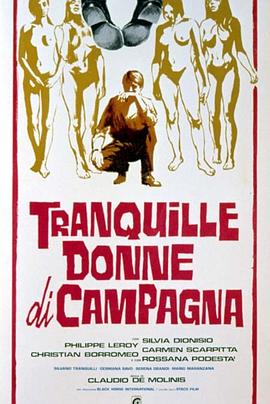
Italy, late thirties. The regime of Mussolini are sent Italian volunteers to the civil war in Spain. On the background of a peaceful village landscapes, behind the walls of the old farmhouses Florianna creating its own dictatorship everything is run by her brother Guido, who requires unquestioning obedience to his will www.molikan.com. He believes all women around is his property, and, as a rooster in the hen house, he constantly confirm this action. His young son Alberto is his problem - all is not similar to the father. He dreams of breaking free from the dictatorial care. When his beautiful cousin Gloria comes to the estate, novel flashes between young people. Guido learns that his sister is going to bequeath her estate to his unworthy son. This heralds a tragic ending.
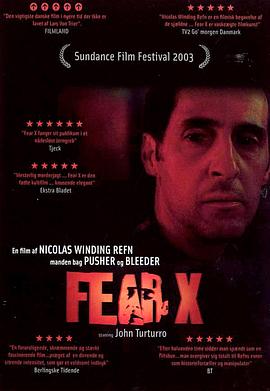
Plot Outline: When his wife is killed in a seemingly random incident Harry (Turturro), prompted by mysterious visions, journeys to discover the true circumstances surrounding her murder. (view trailer)
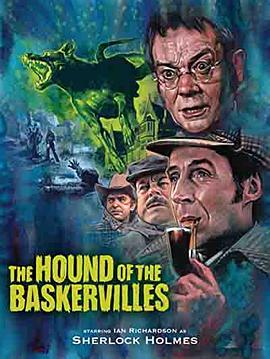
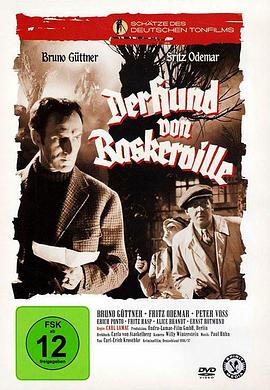
A most pleasingly atmospheric rendition of the tale, noirishly photographed and moodily set, this is the version which probably would have delighted Conan Doyle the most. There is one important plot change which enables the beautiful Alice Brandt to enjoy both a larger role and a more intriguing part in the proceedings. This change also builds up the parts of Dr Mortimer and Lord Charles, yet at the same time provides a nice introduction to the is-he-sinister or is-he-a-good-guy Barrymore, deftly played here by Fritz Rasp.
Despite the sting of its well-developed story, the spellbindingly atmospheric direction and the engrossing performances delivered by the entire cast, many fans may find this version somewhat disappointing. For at least three reasons: As in the novel, the part played in the narrative by Sherlock Holmes, though vital, is minimal. And in this version, not only has no attempt been made to enlarge his role, if anything both writer and director do their best to minimize it. Holmes does not even make his entrance for half-an-hour, and when he does finally appear, he has his back to the camera. It is Fritz Odemar, as Dr Watson, who receives the more favorable camera angles. And there is a purpose in this. It is Watson, not Holmes, who figures as the main protagonist of The Hound of the Baskervilles. For the bulk of the narrative, Holmes disappears. It is Watson and Lord Henry (Peter Voss) who take up the running. The movie is almost over, before Holmes closes in on the villain. And even so, this is not the obsessed, self-important Holmes we are accustomed to see taking charge. Another problem is that the title hound itself does not figure a great deal in the action, a downgrading which will undoubtedly rate as another major disappointment for fans. And finally, it could be argued that the script gives too much attention to Conan Doyle's red herring, the escaped convict, and not enough to the real villain.
This said, it must surely be admitted by all, that Odemar's interpretation of Watson—intelligent, charming, level-headed, courageous and resourceful—is much closer to Conan Doyle's conception than either the bungling, inveterately stupid Nigel Bruce or the self-effacing Ian Fleming.
One other player deserves special mention: Erich Ponto (Dr Winkel in The Third Man) who seems exactly right for Stapleton. A difficult part, superbly played.
- JohnHowardReid, imd
On a calm night in an average city a hardworking URYDE driver, Brandon, picks up just another fare, Judd. Using interactions that blur the lines between the technological world and the physical one, Judd explains a messy breakup. Brandon offers an empathetic ear and a sympathetic heart to his new friend to help him pick up the pieces. Aggregated profiles, algorithms, links, likes and comments bring people closer. But how close is too close?






![见习排爆手[电影解说]](https://viptulz.com/upload/vod/20230111-1/b3dfa95a3a1b44f3226a967b1751b8f1.jpg)



![带你去见我妈[贤哥解说]](https://viptulz.com/upload/vod/20221025-1/4bd8969079f73ac826019892983f2fae.jpg)









![雾人前传[电影解说]](https://img.bfzypic.com/upload/vod/20240927-1/2ce39d54e45a12f9761e93f21d3c4652.jpg)



![永不瞑目2000[电影解说]](https://img.lzzyimg.com/upload/vod/20240721-1/6c441856d5c66eccdd97ae8d4c26691e.jpg)


![贪婪的人[电影解说]](https://img.liangzipic.com/upload/vod/20250210-1/720a9908b5100a87698d3ed24054a3be.jpg)






![终结之旅[电影解说]](https://img.lzzyimg.com/upload/vod/20230327-1/4d9a1596832a05f926a46791a77b1efc.jpg)